Home » Shop » Ansari Forge Copper Damascus Hunter Knife | Best Fixed Blade Hunting Knife

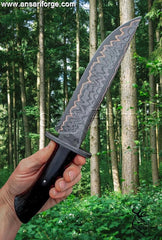
Ansari Forge Copper Damascus Hunter Knife | Best Fixed Blade Hunting Knife

$130.00

63% Off
Close
Price Summary
  • $350.00
  • $130.00
  • 63%
  • $130.00
  • Overall you save $220.00 (63%) on this product
In Stock
Highlights:

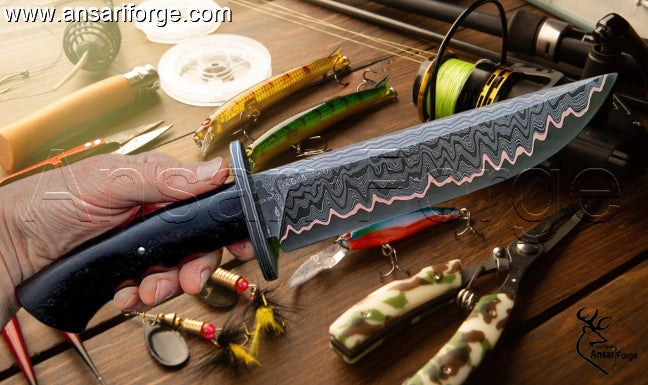
Hand-forged with 512 layers of high carbon 1095, 15N20 steel, and 99.9% pure copper, this Copper Damascus knife is a stunning masterpiece. The full-tang, clip-point design makes it the Best fixed blade hunting knife. Featuring a 60 HRC edge, black micarta handle, and a genuine cowhide leather sheath, the Ansari Forge Hunter knife offers unrivaled performance and beauty for serious outdoorsmen.

Compare
Ask a Question

Ask a Question

    This form uses Akismet to reduce spam. Learn how your data is processed.

    27 People viewing this product right now!
    Description

    🖨 Copper Damascus Hunter Knife: Hand-Forged 1095 & Copper Steel Masterpiece

    Experience the ultimate blend of artistry and performance with the Ansari Forge Copper Damascus Hunter Knife. Hand-forged from a unique composition of high carbon 1095 steel, 15N20 nickel steel, and 99.9% pure copper, this full-tang, fixed-blade knife features a striking clip point and 512 true layers. With a robust 60 HRC hardness and a comfortable black micarta handle, this is the Best fixed blade hunting knife for collectors and serious outdoorsmen alike.

    The Hunter’s Choice: Unveiling the Copper Damascus Knife

    Are you searching for a reliable, high-performance fixed blade that is as stunning as it is functional? The Ansari Forge Hunter Knife is meticulously hand-forged to exceed the expectations of hunters, survivalists, and knife enthusiasts. Our unique integration of copper into the Damascus pattern creates a breathtaking finish that makes this a true collector’s item and the ultimate Copper Damascus knife.

    Unrivaled Blade Quality and Craftsmanship

    The core of this exceptional tool is its blade, a work of art created through expert forge-welding:

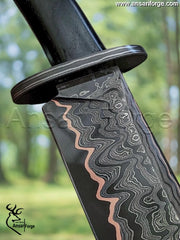
    • Copper Damascus Steel: We combine premium high carbon 1095 steel and 15N20 nickel steel, folding them with 99.9% pure copper. This results in a mesmerizing, one-of-a-kind pattern and provides outstanding edge retention and durability.
    • 512 True Layers: The high layer count ensures maximum strength and showcases the depth of the Damascus pattern.
    • Optimal Hardness: Heat-treated to a rock-solid 60 HRC hardness, guaranteeing a razor-sharp edge that lasts through demanding use.
    • Blade Profile: The classic clip point design is versatile, offering a strong tip for piercing and a generous belly for slicing tasks.
    • Dimensions: A formidable 7.5-inch blade length paired with a spine thickness of 5.0 mm for heavy-duty performance.

    Built for Comfort and Durability – Copper Damascus Knife

    The quality extends beyond the blade to the entire construction, ensuring reliable use in any environment:

    • Full-Tang Construction: A single piece of steel runs the entire length of the knife, providing unmatched strength and balance. This is essential for a Damascus steel knife hunting in the wilderness.
    • Ergonomic Handle: The durable black micarta handle offers a secure, comfortable, and non-slip grip, even when wet.
    • Damascus Guard: A matching Damascus guard protects your hand and enhances the overall aesthetic.
    • Perfect Balance: With a handle length of 4.5 inches and an overall length of 12.0 inches, the knife is perfectly balanced for control and powerful cutting.

    Premium Presentation and Protection

    Every Ansari Forge Hunter Knife comes complete with a high-quality sheath:

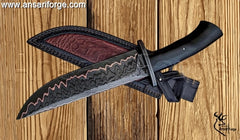
    • Genuine Cowhide Leather Sheath: Hand-stitched and custom-fitted, this durable sheath offers secure carry and superior protection for your blade in the field.

    Specifications

    Feature Detail
    Product Name Copper Damascus Hunter Knife
    Manufacturer Ansari Forge
    Steel Composition 1095 High Carbon, 15N20 Nickel, 99.9% Pure Copper
    Layer Count 512 Layers
    Hardness (HRC) 60 HRC
    Blade Style Clip Point
    Construction Full Tang
    Blade Length 7.5 inches
    Handle Material Black Micarta
    Handle Length 4.5 inches
    Overall Length 12.0 inches
    Spine Thickness 5.0 mm
    Sheath Genuine Cowhide Leather
    Primary Use Hunting, Bushcraft, Collection

    Why Choose the Ansari Forge Hunter Knife?

    1. Unique Aesthetics: The copper-infused Damascus pattern is unlike anything else on the market.
    2. Lifetime Durability: Built to be the Best fixed blade hunting knife you will ever own.
    3. Superior Value: Expert hand-forging at a competitive price point.
    4. Ready to Use: Comes razor-sharp and includes a premium sheath.

    Click ‘Add to Cart’ now and own a piece of functional art! Experience the difference of a genuine Damascus steel knife hunting companion.

    Reviews (0)
    0 ★
    0 Ratings
    5 ★
    0
    4 ★
    0
    3 ★
    0
    2 ★
    0
    1 ★
    0

    There are no reviews yet.

    Be the first to review “Ansari Forge Copper Damascus Hunter Knife | Best Fixed Blade Hunting Knife”

    Your email address will not be published. Required fields are marked *

    FAQ

    What is a Damascus Knife?

    A Damascus knife is a type of blade renowned for its distinctive, wavy, mottled patterns and its legendary reputation for strength, sharpness, and flexibility. The term "Damascus" actually refers to the steel used to forge the blade, not a specific knife style or shape.

    Close-up view of the unique 512-layer copper Damascus knife blade pattern, showing the fusion of 1095 high carbon steel and copper.While the exact forging methods of the original, ancient steel (often referred to as "Wootz" steel) have been lost to history, modern Damascus steel is created using a technique called pattern welding.

    The Two Historical Meanings of "Damascus"

    Understanding what a Damascus knife is requires differentiating between the ancient and modern versions:

    1. Ancient or Historical Damascus Steel (Wootz Steel)

    This original steel, used to make weapons in the Near East (particularly blades traded through Damascus, Syria) from approximately 300 BC to 1750 AD, was characterized by two key features:

    • Manufacturing: It was made from ingots of Wootz steel, a highly pure, carbon-rich crucible steel produced in India.

    • The Pattern: The intricate, flowing pattern visible on the surface was not achieved by layering, but by the formation of microscopic carbide structures within the steel as it was forged and cooled. This structure gave the original blades their unique combination of toughness and edge retention.

      2. Modern Damascus Steel (Pattern-Welded Steel)

    Today, almost all knives marketed as "Damascus steel" utilize the process of pattern welding. This technique recreates the appearance and performance benefits of the ancient steel:

    • Layering: The process involves taking two or more different types of steel (typically a high-carbon steel for hardness and a nickel steel for contrast and toughness).

      Welding: These alternating steel bars are stacked, heated to a forge-welding temperature, and then hammered or pressed together into a single block.

       
    • Folding: The billet (the block of layered steel) is cut, folded upon itself, and re-welded multiple times. This process dramatically increases the number of layers, creating the intricate, organic patterns (like twist, raindrop, or ladder) characteristic of modern Damascus. Your knife, for example, has 512 layers.


    • Etching: To reveal the final pattern, the blade is treated with a ferric chloride acid or similar chemical. The different types of steel react differently to the acid—the nickel steel resists the etch and stays bright, while the high-carbon steel etches darker, making the stunning patterns visible.


    Key Characteristics of a Modern Damascus Knife


    • Distinctive Pattern: The aesthetic beauty of the swirled, layered steel is the most recognizable feature.

       
    • Superior Performance: The layering of different steel types often results in a blade that is both hard (for good edge retention) and tough (less likely to chip or break), offering a high-performance balance.

       
    • Full Tang Construction: High-quality Damascus knives are often made with a full tang, meaning the blade steel extends all the way through the handle, providing maximum strength and balance.

       
    • High Hardness (HRC): Reputable Damascus blades are typically heat-treated to a high Rockwell hardness rating (like your knife's 60 HRC), indicating excellent sharpness potential.

      In summary, a Damascus knife is a blade crafted from pattern-welded steel, combining multiple types of metal to achieve exceptional strength, flexibility, and a world-famous, visually striking appearance.

    how to make a Damascus knife ?

    Making a Damascus knife is a complex and highly skilled process that involves metallurgy, blacksmithing, and a keen artistic eye. It's essentially about taking multiple types of steel, bonding them together, and then manipulating them to reveal a beautiful, layered pattern.

    Here's a breakdown of the key steps involved in making a modern pattern-welded Damascus knife:

    1. Preparing the Steel Stack (Billet)

    You start by selecting two or more types of steel that have different properties, especially how they react to etchants (acid). Common choices are a high-carbon steel (like 1084 or 1095) for edge retention and a nickel-rich steel (like 15N20) for bright contrast in the pattern. These are cut into flat bars. The bars are cleaned thoroughly to remove any scale, rust, or grease, then stacked neatly on top of each other. The number of layers in this initial stack is often a factor in the final complexity of the pattern.

    2. Forge Welding the Stack


    The stacked steels are often tacked together with a small weld on the ends or wrapped with wire to hold them firmly in place. This "billet" is then placed into a forge and heated to a very specific temperature (typically around 2300-2400°F or 1260-1315°C), where the steels become almost molten and sticky. Flux (like borax) is often applied to prevent oxygen from contaminating the weld and creating scale. Once at temperature, the billet is quickly removed and hammered (either by hand with a hammer, or with a power hammer/hydraulic press) to force the layers to bond together completely. This initial weld creates a solid piece of layered steel.

    3. Drawing Out, Cutting, and Folding (Increasing Layers)

    After the initial weld, the billet is typically drawn out (stretched) to make it longer and thinner. Once stretched, it's cut into sections (usually 2 to 4 pieces, depending on the desired number of layers and final size). These cut sections are then stacked again, heated, and forge-welded together. This process of drawing, cutting, and re-welding is repeated multiple times to exponentially increase the layer count. For example, starting with 10 layers, one fold creates 20, the next 40, then 80, 160, 320, and so on. Your knife's 512 layers would require several folds.

    4. Pattern Manipulation


    Once the desired number of layers is achieved, the smith can manipulate the billet to create specific patterns. This involves different forging techniques:

    • Twisting: The billet can be twisted while hot to create spiral or "twist" patterns.

       
    • Wavy/Ladder: Grinding grooves into the side of the billet and then forging it flat can create wavy or "ladder" patterns.

    • Raindrop/Random: Using a punch or ball peen hammer to indent the surface before forging it flat can create "raindrop" or more random patterns. The skill here lies in deforming the layers in a controlled way that will be revealed later.

    5. Forging the Blade Shape


    With the pattern set, the Damascus billet is then forged down to the rough shape of the desired knife blade. This involves drawing out the tang (the part that goes into the handle), shaping the blade profile (e.g., clip point, drop point), and setting the bevels (the angles that form the cutting edge). This stage requires careful control to ensure the layers and pattern are preserved correctly.

    6. Grinding and Heat Treatment


    After forging, the blade needs significant grinding to refine its shape, create the final bevels, and achieve a smooth surface finish. The grinding must be done very carefully to avoid overheating the blade, which could ruin the heat treatment. Once ground to near-final dimensions, the blade undergoes heat treatment:

     
    • Hardening: The blade is heated to a critical temperature and then rapidly quenched (cooled in oil or water) to make it very hard.

    • Tempering: The hardened blade is brittle, so it's heated again to a lower temperature (tempered) to reduce brittleness and increase toughness, achieving the desired balance of hardness and flexibility (like your knife's 60 HRC).

    how to clean damascus steel knife​ ?

    Cleaning a Damascus steel knife properly is essential to maintain its unique pattern, prevent rust, and ensure its longevity. Because Damascus steel often involves high-carbon components, it's more susceptible to corrosion than stainless steel.

    Here’s a step-by-step guide on how to clean a Damascus steel knife:

    1. Immediate Wipe Down After Use

    The most crucial step in caring for a Damascus knife is to clean it immediately after every use, especially after cutting acidic foods.

    • Action: Use a soft cloth or paper towel to wipe down the blade thoroughly. Remove any food residue, moisture, or oils from the surface.

    • Purpose: This prevents food acids and moisture from sitting on the steel, which can quickly lead to staining or rust.

    Scroll To Top
    Close
    Close
    Close

    My Cart

    Shopping cart is empty!

    Continue Shopping

    Close-up view of the unique 512-layer copper Damascus knife blade pattern, showing the fusion of 1095 high carbon steel and copper.
    Ansari Forge Copper Damascus Hunter Knife | Best Fixed Blade Hunting Knife
    $130.00 Add to cart

    Select at least 2 products
    to compare